
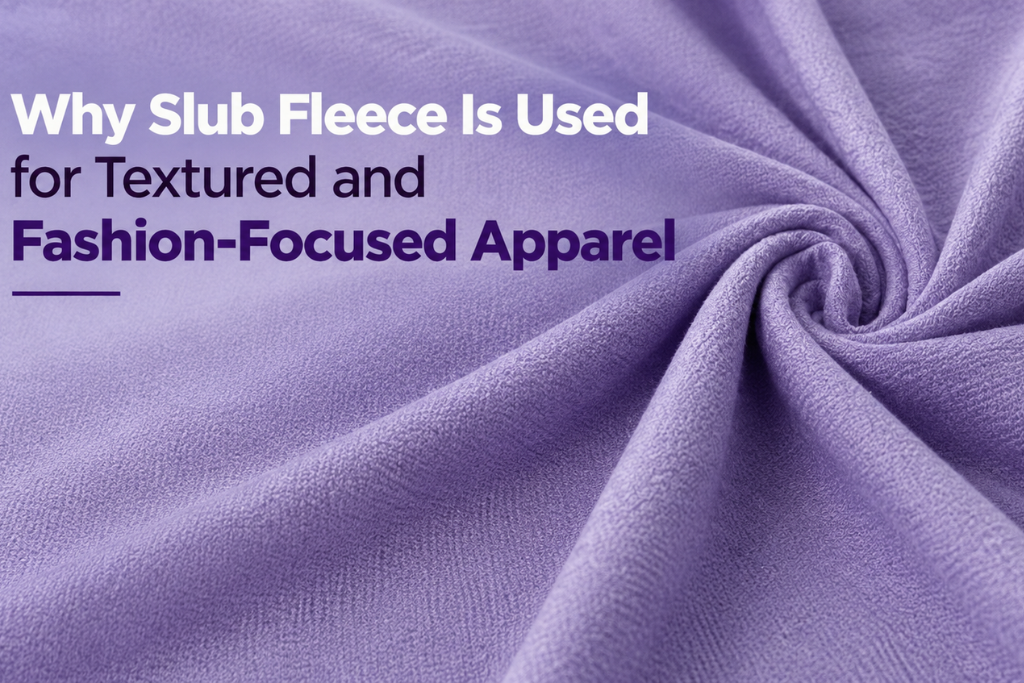
Why Slub Fleece Is Used for Textured and Fashion-Focused Apparel
Fleece Fabric Manufacturers in India are a significant factor in terms of providing materials for the changing trends in apparel, which take into consideration factors such as quality, comfort, and distinctive styles to be incorporated in fabrics. There is slub fleece, which stands out because of its irregular texture and unique visual quality. While conventional fleece has a fairly even texture, slub fleece has irregularities in the yarns used.
These differences provide a unique quality to the fabric. The irregularity makes slub fleece ideal for designing stylish clothes that do not depend so much on prints and decorative touches. It gives designers freedom in creating new designs that focus on fabric rather than prints and decorations.
What Makes Slub Fleece Different from Regular Fleece?
Slub fleece’s uniqueness is brought about by the differences in the yarn construction, thus resulting in an irregular appearance. This gives the slub fleece fabric more expressive qualities than the ordinary fleece fabric.
The final properties of the slub fleece fabric will be determined by characteristics such as yarn content, knitting construction, weight of fabric, and finishing. Knowledge of these factors assists fashion brands in selecting the right slub fleece fabric.
How Slub Fleece Enhances the Look of Fashion Apparel
A fabric’s texture may affect the appearance of a piece of clothing, even if its design is quite basic. Slub fleece provides a unique texture that goes well with current trends in fashion clothing.
- Adds visual texture: Natural irregularities of the yarn provide a unique texture.
- Enhances the appearance of minimalistic designs: Hoodies and sweatshirts without any other embellishments will appear more interesting.
- Fits in with current casual wear: The textured look suits casual silhouettes and current fashion.
- Provides a different character of the fabric: Slub fleece provides an option to use something other than the absolutely smooth fabric.
- Works with minimalist fashion: The natural texture will suit the minimalistic approach.
Popular Apparel Applications of Slub Fleece
There are multiple options of clothing for which slub fleece could be studied as an option. Which specific application would be the best choice depends on the weight, characteristics, and comfort of the material.
- Hoodies: The unique appearance of the fabric will help give regular hoodies a unique look.
- Sweatshirts: The fabric can add texture to standard crew-neck and relaxed fit sweatshirts.
- Street-wear: The various textures of the fabric match well with oversized styles of streetwear
- Loungewear: Proper fabric constructions might be applied to lounging clothes sets.
- Seasonal clothes: Various weights could be studied for seasonal clothes.
Why Apparel Designers Choose Textured Fabrics
Apart from colour and garment cut, designers do not always stop when developing a collection. It is possible that fabric texture may affect the end result, assisting the brand in creating its own unique style.
- Less need for embellishment: Textured fabric provides an element of interest even for plain clothes.
- Distinctive look: Special textures can help the line to distinguish itself from other basic clothes.
- More colorful options: Depending on the type of dye and finishes used, the texture may combine differently with different colors.
- Contemporary look: Textured fleece goes well with streetwear lines.
Important Factors to Check Before Selecting Slub Fleece
Even though appearance is one of the key factors in the selection of slub fleece, it’s not the only one. Apparel companies have to assess their fabric sample carefully before purchasing large quantities.
- Textural consistency: Ensure that the slub texture meets the design requirements.
- GSM and thickness: Choose the right fabric weight for the garment and the season.
- Fibre composition: Ensure proper fibre composition based on the required qualities.
- Finishing: Analyze fabric surface, appearance, and finishing.
- Durability: Assess the shrinkage and pilling, color fastness, and dimension stability when needed.
- Production performance: Fabric should perform properly in cutting and sewing, and garment finishing stages.
Choosing the Right Fabric Manufacturer for Apparel Production
The right manufacturing partner will assist apparel brands in sourcing the right fabric based on their needs and specifications. Comparisons and tests of the samples will minimize the chances of choosing an incompatible fabric.
- Experience in manufacturing: Inquire whether the supplier is experienced in manufacturing knit fabrics as well as other fabric constructions.
- Quality Control: Inquire about the methods used for consistency tests.
- Specifications: Verify specifications like composition, GSM, width, and others.
- Sample testing: Get samples tested before committing to production orders.
- Order processing: Inquire about minimum order quantity and production process beforehand.
PI Cottex: Fabric Solutions for Evolving Apparel Needs
Pi Cottex knows that using the correct fabric can affect how the final product looks and feels. As one of the best fabric manufacturers in India, Pi Cottex provides knit fabrics for companies creating collections of casual wear, sportswear, and more.
Some of our fabric offerings include knitted fabrics for companies creating collections of casual wear, sportswear, and more. Pi Cottex understands the importance of selecting fabrics based on the characteristics of the garments being produced.
For companies that are trying to create textured clothing products, careful consideration of fleece and other knit fabrics can allow you to determine which fabrics suit your collection. Pi Cottex suggests that companies consider fabric construction, texture, GSM, and finishing when planning their next production process. Contact Pi Cottex regarding your fabric needs.
0 comments