
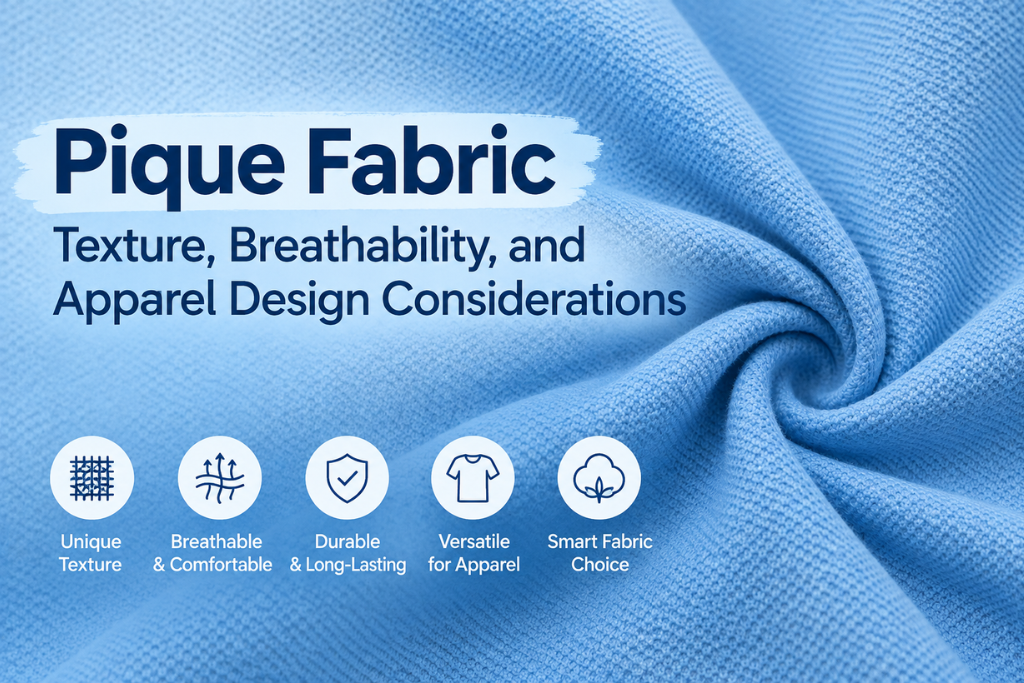
Pique Fabric Texture, Breathability, and Apparel Design Considerations
The Knitted Fabric Manufacturers in India concentrate on the production of fabric that can satisfy the evolving needs of apparel manufacturers and designers. Pique fabric is one type of knitted fabric that is characterized by its specific textured finish, softness, and utility in many clothing applications. It has specific features that give the garments a slightly three-dimensional effect and has some features that can prove to be helpful for different kinds of clothing applications.
The selection of pique fabric should not be based only on the appearance. The designer and the manufacturer should consider many other factors that include breathability, weight, fiber content, stretch, durability, finishing, and the type of garment application.
Understanding the Texture of Pique Fabric
It is easy to identify the texture of pique fabric since it differs from other smoother knitted fabrics. The fabric surface is a result of the knitting process of the pique fabric. The surface helps add depth to clothes and creates a more sophisticated look without having to rely on additional design aspects.
This type of texture is also very important during the process of garment making since the processes of cutting, stitching, pressing, and finishing need to be done keeping in view the nature of the fabric and its surface. In the case of polo shirts, the look of the garment mainly depends on the fabric.
Breathability and Comfort in Apparel
Breathability is yet another feature that needs to be considered when handling the pique fabric. Since this fabric is knit, it can let the air pass through it. This may make this fabric more comfortable to wear. As such, pique is an excellent choice for making garments for warm weather or general use.
However, breathability will not solely depend upon the knitting design. Other factors such as the nature of fibers used, GSM, yarn used, and finishing could affect the fabric performance as well. It is thus necessary to consider the entire fabric specification while deciding upon the use of pique fabric in a garment.
Factors Designers Should Consider
Some factors that need to be taken into account during the use of pique fabrics in garments include the following:
- Weight of the fabric: Lightweight constructions could be used for making warmer clothing, whereas heavier fabrics would give a more sturdy look.
- Fiber content: Different combinations of cotton, polyester, and mixed constructions could be available for different performance characteristics of the product.
- Elasticity: The degree of elasticity required would vary based on the nature of the garments.
- Appearance of the fabric surface: Pique surface appearance would be very significant in defining the appearance of the garment.
- Finish: The finish given to the fabric would affect its performance.
All these factors could help manufacturers choose the appropriate fabric for the product depending on the needs of the garment rather than its appearance only.
Pique Fabric for Different Apparel Designs
Pique fabric has mostly been linked with polo shirts; however, its uses are not restricted to these clothes alone. Pique fabric can also be used in making casual shirts, uniforms, sports clothing, and any other clothing in which texture, comfort, and body are desired by the designer.
In this case, the lighter version of the pique can suit the design of summer wear, whereas a sturdier fabric might be a good choice in case when some extra volume and structure are needed in a garment.
How Construction Influences Fabric Performance
The construction of the fabric is directly related to how well pique will work when used in apparel. The qualities of yarn, the knitting process, GSM, and finishing all affect aspects such as softness, stability, breathability, elasticity, and appearance. It is for this reason that fabric development must take into consideration both technical aspects as well as the end use of the fabric.
Consistency is also important during the manufacturing process when using the fabric in commercial apparel production. Consistency in texture and width, weight and color, and finishing helps ensure predictability in the production process.
PI Cottex for Knitted Fabric Requirements
At PI Cottex, we appreciate that apparel manufacturing companies require knitted fabrics that not only have appropriate constructions but also possess desirable aesthetics and functionalities. The fabrics we produce are designed considering the needs of various apparel manufacturers by keeping in view aspects such as fabric construction, fabric material, fabric weight, texture, and application.
For pique and other knitted fabrics, selecting proper specifications at the design stage may prove helpful in designing apparel that possesses desired comfort, aesthetics, and functionalities. The goal of PI Cottex is to provide fabric solutions that can meet the needs of various apparel applications.
0 comments