
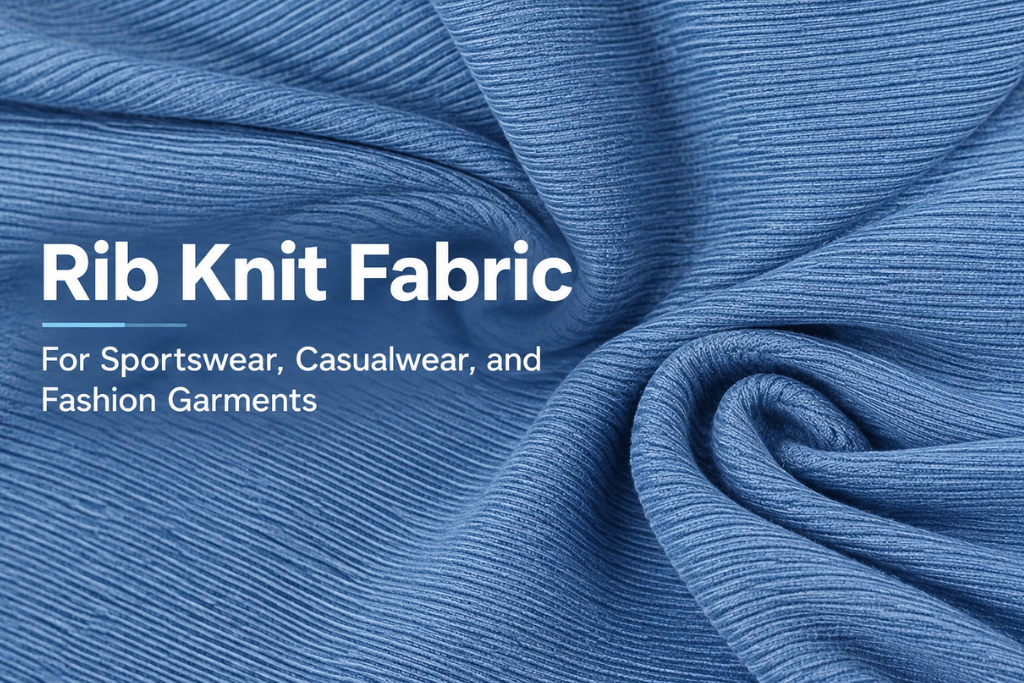
Rib Knit Fabric for Sportswear, Casualwear, and Fashion Garments
The best fabric manufacturers in India realize that various clothing styles need fabrics that have the correct proportion of stretch, comfort, appearance, and durability. Rib knit fabric is one type of fabric that has been used to make sports and casual wear as well as fashion apparel due to the special construction of the fabric and its elasticity.
While most of the flat knitted fabrics have no such special properties, rib fabric is made using alternate knit and purl columns, thus providing vertical ribs to the fabric and its elasticity. Based on the fiber content, weight, and construction details, rib fabrics can be produced for various garments.
What Makes Rib Knit Fabric Different?
The production process of rib knit material results in features that make it suitable for use in various types of apparel. These include good stretch, recovery, and flexibility, which enable the material to fit well while being flexible enough not to be too tight on the wearer’s body.
The textured appearance of the fabric also serves to enhance the looks of plain-looking garments. Rib knit fabric may be made in different widths, weights, fiber blends, and finishes depending on the use of the fabric.
Some of the commonly desirable qualities include:
- Good elasticity and recovery properties
- Soft touch
- Elastic construction
- Ribbed appearance
- Useful in close-fitting garments
- Fiber blend ability
- Various weights and fiber blends
Rib Knit Fabric for Sportswear
Sportswear requires materials that offer flexibility while remaining comfortable to wear during exercise. Rib knit material is one of the types of materials that can be applied in sportswear in selective cases when elasticity and a fitted structure matter.
It will be suitable for use in areas like waistbands, sleeves, collars, armholes, tight shirts, among others, depending on the material structure. In relation to fiber content and construction, rib fabric will complement performance-oriented fabrics used in sportswear designs.
GSM choice, yarn used, and finish applied play an important role for sportswear producers. These may affect the overall behavior of the design during exercise and cleaning.
Rib Fabric for Comfortable Casualwear
This is because casual wear places a great deal of emphasis on ease and comfort of wear; thus, rib knit fabric is suitable for making certain types of clothing items. Rib fabric can be used in making fitted T-shirts, tops, dresses, tank tops, loungewear, among others.
The stretch property of the fabric ensures that the clothes made from it fit easily and comfortably, whereas the ribbing makes the fabric have an appearance that is different from that of smooth knit fabric. Rib fabric may be combined with other types of knits when designing clothes to achieve texture differences within one piece of clothing.
Fabric choices in making everyday wear can be modified depending on the level of softness, thickness, and stretch required.
Rib Knit Fabric in Fashion Garments
Most fashion designers normally incorporate texture in their designs. Rib knit fabric is inherently textured, which makes it appropriate for minimalistic and non-minimalistic designs.
Rib fabric can be incorporated into form-fitting dresses, crop tops, skirts, fashion tops, layers, and outfits. The vertical ribbing of the material can create a clean look and thus make the material appropriate for designs where texture and silhouette complement each other.
The colour, fibre content, yarn, GSM, and finishing techniques can determine the final look of rib fabrics.
Choosing the Right Rib Knit Fabric
Selection of rib fabric should be based upon the use of the garment and its required features.
Factors to be considered include:
- Fibre content: Cotton, polyester, viscose, elastane, and blends of materials will give varying properties relating to softness, durability, stretchability, and look.
- GSM: GSM of fabric will give an effect on thickness, drapability, and construction of the garment.
- Stretch and recovery: This factor is quite significant in the case of a fitted garment and in specific areas like cuffs and waistband.
- Surface appearance: This factor can affect the visual appearance of the finished garment due to the size of rib and its definition.
- Dyeing and finishing: The finishing process ensures proper colour and appearance.
PI Cottex and Rib Knit Fabric Manufacturing
In PI Cottex, fabric development involves the creation of knitted fabrics that are applicable for various types of garment needs. As one of the fabric manufacturing companies in India, we have different fabric specifications and compositions to assist the clothing manufacturing industry, apparel brands, and garment manufacturing requirements.
Some of the factors that should be considered in fabric development include construction, GSM, composition, colour, stretch, and finishing. In the case of rib knit fabric, these fabric specifications can be prepared in accordance with the use of the fabric, be it sportswear, casual wear, fashion garment, or garment parts.
A continuous manufacturing process and consideration of fabric specifications are essential when it comes to the supply of materials for the commercial clothing manufacturing process. Fabric manufacturers can assist in the selection of the appropriate knitted construction from a fabric development perspective.
Conclusion
As a result of the fabric having a rough texture, elasticity, and softness, the rib-knitted fabric is appropriate to be made into sportswear, casual wear, and fashionable clothing. The weight, fiber type, color, and stretchable properties of the fabrics can be obtained by using the rib knitting technique.
The choice of the right rib construction by clothing manufacturers and designers depends on the function of the garment, desired fit, weight, fiber type, stretch and recovery, and finishing. Using the right specifications, rib knit fabric can be an added value to the garment.
PI Cottex continues to develop its business in accordance with the requirements of knitted fabrics, providing consistent specifications and application-oriented fabric development.
0 comments