
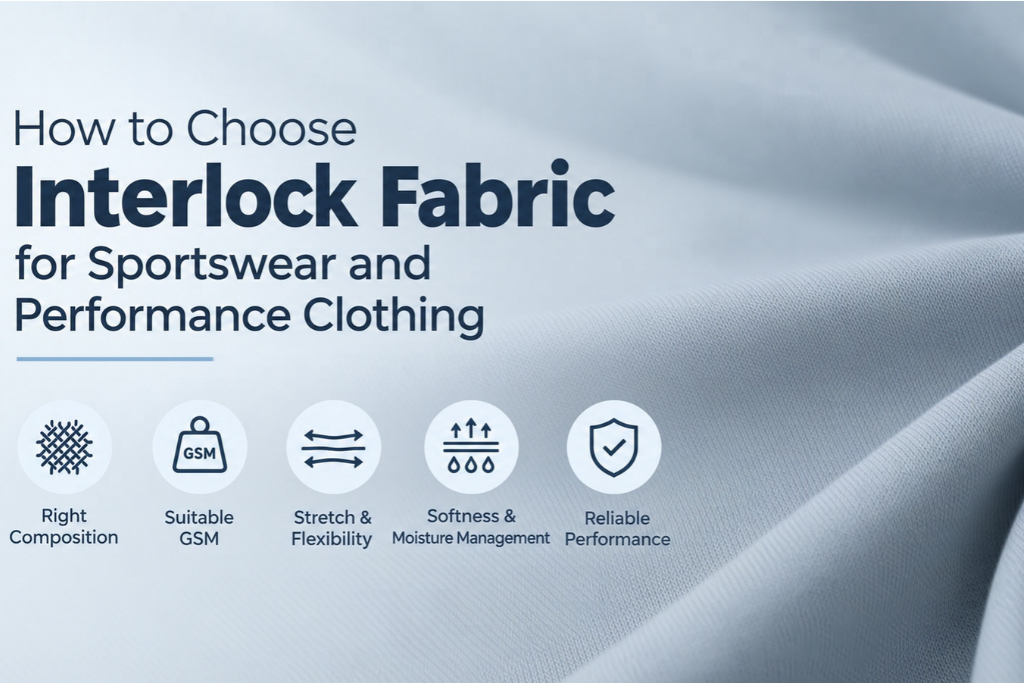
How to Choose Interlock Fabric for Sportswear and Performance Clothing
Interlock Fabric Manufacturers can be considered one of the sources of providing knitted fabrics that can be used in various kinds of apparel, such as sportswear and performance wear. When choosing fabric for activewear, one has to think about factors besides the looks of the material. Comfort, elasticity, and even the weight of the material are among those factors.
Interlock fabric is a kind of double knit made with the use of two needles, thus having a smooth side. In comparison with common single jersey, interlock has a more compact structure. This is why it can be considered a good choice of fabric for sportswear, activewear tops, and training clothes.
Nevertheless, the choice of interlock fabric depends on certain criteria.
Check the Fabric Composition Before Making a Selection
Fibre composition is one of the aspects to take into account when choosing an interlock fabric for performance clothing, since different fibres provide unique features that need to be taken into consideration during fabric selection for the intended purpose and use of the garment.
Possible choices could be:
- 100% Cotton Interlock: Provides comfort through softness and absorbency, and hence is ideal for use as casual sportswear.
- Cotton Polyester Interlock: Provides the comfort of natural cotton together with increased durability and faster drying rate than cotton.
However, the choice of composition would depend on the nature of the activity, the design of the garments, and expected performance.
Select the Right GSM for Different Sportswear Applications
GSM (grams per square meter) is the measure of the weight of the fabric and is essential when selecting interlock for sportswear. The proper GSM affects the thickness of the fabric and its use for specific types of clothing.
The following are some considerations:
- Lightweight Interlock – This may suit lightweight sports shirts where light fabric feels more comfortable.
- Medium Weight Interlock – May suit training t-shirts and casual activewear.
- Heavy Weight Interlock – Best suited where more body and bulk are needed.
There isn’t one GSM that will work for all types of sportswear. The choice depends on the fabric construction, type of clothing, and season. Different GSM samples need to be tested.
Evaluate Stretch, Flexibility and Fabric Recovery
The sportswear has to provide freedom of movement while being worn by an individual. This is why stretchability and flexibility become important aspects in selecting the interlock fabric.
Generally, the fabrics made of interlock construction have a good knitted structure and some degree of natural elasticity. Still, the level of stretchability will depend on the type of fibres used, yarns, and knitting parameters used in the process. The fabrics with the use of elastane fibres can have some extra stretch and recovery capacity compared with the 100% cotton fabrics.
Before selecting the fabric, take into account the following:
- Stretching: One should consider whether the fabric allows easy movement of the body during physical activity.
- Recovery: Whether the fabric easily recovers its shape when stretched.
- Dimensional stability: Whether the fabric is stable in terms of its measurements after being washed and worn.
- Comfort: Whether the fabric is suitable for making the garment.
Consider Softness and Moisture Management
Comfort is an essential aspect to consider in performance garments because sportswear is worn in situations that include movement and perspiration. Although interlock materials provide smooth and comfortable construction, their breathability and moisture management capabilities are influenced primarily by the fiber used in the material.
For instance, while cotton interlocks provide moisture management features and comfort, polyester interlocks are designed for moisture management applications.
In the evaluation of fabric samples, apparel manufacturers must consider the following:
- Air Permeability – The ability of the air to pass through the material must be considered.
- Moisture Management – The capability of the fabric to manage moisture based on the garment’s needs.
- Surface Softness – Fabric softness based on the material feel against the skin.
- Weight and Comfort – The suitability of the fabric weight in relation to the garment application.
Incorporating these properties based on the garment function can create more comfortable sportswear.
Choose PI Cottex for Reliable Interlock Fabric Solutions
As one of the leading fabric suppliers in India, we realize the importance of choosing the correct knitted fabric in producing performance clothing and sportswear. At PI Cottex, we manufacture a variety of knit fabrics that are ideal for use in garment manufacturing processes.
Interlock, Single Jersey, Rib Knit, Pique, Fleece, and many more types of knitted fabrics make up our product offering. We manufacture our knitted fabrics based on various fabric constructions and specifications for the requirements of clothing brands and garment manufacturers.
We offer an integrated manufacturing process that consists of knitting, dyeing, printing, and finishing to ensure that we keep control at different levels of the fabric manufacturing process. According to us, it is important to choose the right fabric for each apparel application.
At PI Cottex, we are committed to ensuring quality manufacturing support for you, your customers, and garment manufacturers.
0 comments